Best Carbon Steel Frying Pans for High-Heat Searing

Five carbon steel skillets, ranked by the two figures that actually change how a pan cooks: published weight and cooking diameter. Plus who each one suits, and where every pick gives something up.

By Quinn BellUpdated 15 min read
On this page
- Best carbon steel frying pan for professional chefs at a glance
- The four profiles these five pans map to
- Why weight decides more than diameter
- 1. バリューサークル Crafted in Japan. Trusted by Chefs. Japanese — Best overall
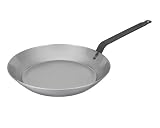
- 2. Matfer Bourgeat Black Carbon Steel Frying Pan — Best premium
- 3. Merten & Storck 12" Pre-Seasoned Carbon Steel Frying Pan — Runner-up
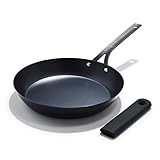
- 4. OXO Obsidian 10" Carbon Steel Frying Pan — Best for beginners
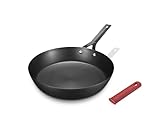
- 5. Yonida Carbon Steel Pan — Best budget pick
- Does a carbon steel frying pan really suit professional chefs?
- What a pre-seasoned coating actually gives you
- What owning one actually involves
- The verdict
- FAQ
The best carbon steel frying pan for professional chefs is the バリューサークル 11-inch, a precision-formed Japanese pan with a 28 cm outer diameter and a 20.5 cm cooking base. If you want mass over agility, the Matfer Bourgeat 12 3/8-inch is the better buy at a published 5.16 lb. What actually splits this field is not the brand or the country of origin. It's the ratio between how wide the pan cooks and how heavy it is in your hand. Two of these five publish a weight. That gap tells you something.
Best carbon steel frying pan for professional chefs at a glance
| Pick | Cooking size | Published weight | Price |
|---|---|---|---|
Best overall バリューサークル Japanese Carbon Steel Frying Pan |
11.0 in outer 8.07 in base |
Not published "lightweight" claim |
Check Price |
Best premium Matfer Bourgeat Black Carbon Steel Frying Pan |
12 3/8 in | 5.16 lb | Check Price |
| 12 in | 3.31 lb | Check Price | |
Best for beginners OXO Obsidian 10" Carbon Steel Frying Pan |
10 in | Not published "lightweight" claim |
Check Price |
Best budget pick Yonida 10 Inch Carbon Steel Pan |
10 in | Not published | Check Price |


The four profiles these five pans map to
I sorted these five by who they're actually for, then checked whether the published specifications backed the fit. Four profiles came out of it.
- The cook who wants a large surface and a light pan. That's the バリューサークル, at 11.0 in outer diameter with an 8.07 in base, described by the brand as precision-formed rather than cast.
- The cook who wants mass. Matfer's 5.16 lb is the heaviest published figure here, and heavy pans hold temperature when cold food hits them.
- The cook who wants the most cooking area per dollar. Merten & Storck gives 12 in of diameter at the second-cheapest position in this set.
- The cook who's leaving nonstick behind. The 10 in OXO and Yonida both list a removable silicone handle sleeve, which is a small thing that makes a new habit less painful.
Two picks got demoted rather than cut. The Yonida sits last because it publishes the fewest specifications of the five: no weight, no oven rating, nothing about handle construction. The OXO sits fourth because 10 in is a limitation, not a preference, once you're cooking for more than two.
Why weight decides more than diameter
Most guides to the best carbon steel frying pan for professional chefs compare diameter first. Diameter tells you how much food fits. It doesn't tell you how the pan behaves.
Weight does. A heavier pan carries more thermal mass, so the surface temperature drops less when you lay in a cold steak, and the crust forms faster. A lighter pan recovers heat quickly from the burner instead, and it's the one you can lift with one hand for the entire service.
Here's the trick with this set: only two picks publish a weight at all. Matfer lists 5.16 lb at 12 3/8 in. Merten & Storck lists 3.31 lb at 12 in. Those two pans are within about half an inch of each other in diameter, and one is roughly 1.85 lb heavier than the other. That is the whole argument, in two numbers.
The other three call themselves lightweight without printing a figure. バリューサークル says precision forming produces "a lighter, more responsive cooking surface" than casting. OXO claims durable, lightweight construction. Both are manufacturer claims, so treat them as direction rather than measurement.
My rule: if you toss food, go under 3.5 lb. If you turn food with tongs, go heavier.
1. バリューサークル Crafted in Japan. Trusted by Chefs. Japanese — Best overall
The most useful size-to-handling balance in this group, with the clearest published geometry of any pick here.
Best for: cooks who want an 11-inch surface without the arm strain Skip it if: you want a published weight before you buy
This is the only pick in the set that publishes its base diameter alongside its outer diameter. That matters more than it sounds. At 28 cm (11.0 in) across the rim and 20.5 cm (8.07 in) at the bottom, you get a flat sear zone about eight inches wide plus a sloped wall of nearly three inches to move food up. Depth is listed at 5.2 cm. That combination is what lets one pan handle a sear, a sauté and a stir-fry without swapping.
The company says the pan is made by Fujita Kinzoku, a family workshop established in 1951, and precision-formed rather than cast. It also says the shape was developed with a Tokyo-based chef for control during sautéing and searing. Both are the brand's claims, not measurements I can hold them to. What I can verify from the listing is the geometry, the walnut colourway, model TC-F005 and the pre-seasoned finish.
The trade-off against Matfer is straightforward. You lose about an inch and a half of diameter and any published weight figure, and you gain a shape that's easier to work one-handed. Against Merten & Storck, you pay considerably more for two fewer inches.
Pros:
- Publishes both outer and base diameter, unusual in this set
- 5.2 cm depth suits stir-frying as well as searing
- Precision-formed rather than cast, per the brand
- Pre-seasoned and usable from the box
- Sloped walls make tossing practical
Cons:
- No published weight, so thermal mass is unknown
- Only one seller lists it
- No stated oven temperature rating
- No published warranty
- Sits in the higher price positions of this set
2. Matfer Bourgeat Black Carbon Steel Frying Pan — Best premium
The heaviest and largest pick here, and the only one with a stated warranty.

Best for: high-volume searing where mass and a welded handle matter Skip it if: you flip food by tossing rather than turning
Two published details separate this pan from everything else in the group. The first is 5.16 lb across 12 3/8 in, the highest weight-to-size figure available here. The second is the handle: Matfer states the steel handle is welded to the body, giving a rivet-less construction that prevents the buildup of rust, grease or burnt food. Rivets are where crud lives in a working kitchen, so removing them is a real design decision rather than a marketing line.
It's also the only pick with a warranty in its listing, one year against defects in material and workmanship, excluding damage from abnormal use and normal wear. Matfer states it's made in France from a single piece of uncoated high-carbon steel, free of PTFE and PFOA, and compatible with all hob types including induction. The brand mentions open fires, grills and ovens.
The cost of that mass is honest. At 5.16 lb before food goes in, this is not a pan you toss with one wrist, and the published dimensions in the listing are clearly a data error rather than usable figures. Against the バリューサークル, you gain thermal stability and lose agility.
Pros:
- 5.16 lb gives the most thermal mass here
- 12 3/8 in is the largest cooking size in this set
- Welded, rivet-less handle joint per the brand
- Only pick with a published warranty
- Uncoated single-piece steel, no chemical coating
Cons:
- Heaviest pan here, awkward for one-handed tossing
- Listed dimensions are unusable (0.02 in on all three axes)
- Not pre-seasoned according to the listing
- The most expensive pick in this group
- Only one seller lists it
3. Merten & Storck 12" Pre-Seasoned Carbon Steel Frying Pan — Runner-up
The best surface area per dollar in this set, and the lightest published weight at a full 12 inches.

Best for: the widest surface at the lowest position in this set Skip it if: your burner is under 12 inches wide
Run the two published weights against each other and this pan's case writes itself. It delivers 12 in of diameter at 3.31 lb, roughly 1.85 lb lighter than Matfer at a near-identical size, while sitting at the second-cheapest position in this group. It's also the pick buyers choose most often here by a wide margin, so the value proposition isn't just mine.
The listing states it arrives pre-seasoned with natural oils, oven-safe and induction-safe, and positions it as a cast iron alternative with faster heating and easier handling. Merten & Storck also quotes New York Magazine's The Strategist calling it a no-nonsense kitchen workhorse. That's a third party's opinion carried in the listing, not a specification.
Model CC003337-001 measures 4.13 x 20.7 x 12 in overall, which is the number to check before you buy. That 20.7 in total length is the longest in this set, and it means a long handle sticking out over your other burners. A 12 in pan on a standard four-burner range crowds its neighbours, and the flared rim needs the space too. That's the real limit, not the weight.
Pros:
- 3.31 lb at 12 in, the best published weight-to-size ratio here
- Second-cheapest pick in this group
- Pre-seasoned and induction-safe per the listing
- Sells faster than the rest of this set
- Oven-safe according to the brand
Cons:
- 20.7 in overall length crowds adjacent burners
- No published warranty
- No specific oven temperature ceiling stated
- Thinner mass than Matfer for heavy searing
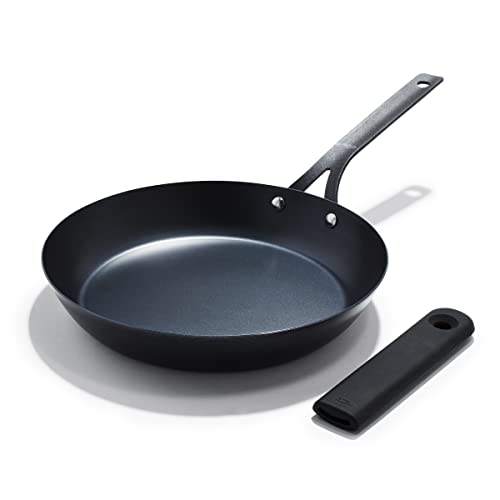
4. OXO Obsidian 10" Carbon Steel Frying Pan — Best for beginners
The gentlest entry into carbon steel, with the only published oven ceiling in the group.
Best for: first-time carbon steel owners moving off nonstick Skip it if: you cook for four or more at once
OXO publishes one figure nobody else here does: oven-safe up to 660°F. That's a useful number, because it tells you the handle and body will take a finish in a hot oven without guesswork. Everything else in this set either says "oven-safe" without a ceiling or says nothing.
At 10 in with overall dimensions of 2 x 14 x 10 in, this is the most compact footprint in the group apart from the Yonida. The removable silicone handle sleeve is the beginner-friendly part. Carbon steel handles get burning hot, and a sleeve you can pull off before the pan goes in the oven solves that without a towel. OXO says the pan arrives pre-seasoned and develops a natural patina with use, and the listing cites a Wirecutter 2025 pick.
Where it gives ground: 10 in holds two chicken breasts, not four, and no weight is published so you're taking "lightweight construction" on the brand's word. Against Merten & Storck you lose two inches of diameter for a higher price position. Against the バリューサークル you lose an inch and the published base measurement. You gain a stated oven number and a cool handle.
Pros:
- Only pick with a published oven ceiling: 660°F
- Removable silicone handle sleeve included
- Compact 14 in overall length fits crowded ranges
- Pre-seasoned and induction-ready per the listing
- Sells nearly as fast as the Merten & Storck
Cons:
- 10 in limits you to two portions at a time
- No published weight figure
- No published warranty
- Costs more than the larger Merten & Storck
- Silicone sleeve must come off for oven use
5. Yonida Carbon Steel Pan — Best budget pick
The cheapest way into carbon steel here, with the thinnest published specification sheet to match.
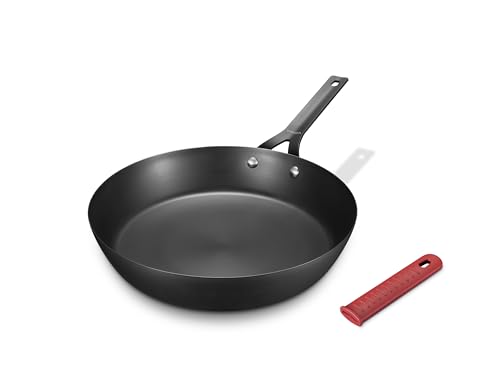
Best for: a second pan for eggs and single portions Skip it if: you need a published oven rating
This is the cheapest of the five, and it's the pan I'd suggest if you're not yet sure carbon steel suits how you cook. Model YNCSP10 is a 10 in pan with overall dimensions of 2 x 10 x 10 in, which is the smallest total footprint in this set. Note that the handle isn't counted in those figures.
Yonida says the pan arrives pre-seasoned with 100% natural oil and includes a removable silicone handle holder that stays cool to the touch. It also claims even heating without hot spots and restaurant-quality searing. Those are the brand's claims, and this listing leans on them harder than most because the specification list itself is short: size, colour, count, dimensions, model. No weight. No oven ceiling. No warranty. No handle construction detail.
Three sellers list it, more than any other pick here, which is worth knowing if a particular seller matters to you. The honest trade-off is information. You're buying the least documented pan in the group at the lowest price position, and for a first carbon steel pan or a dedicated egg pan, that's a reasonable bet. For a pan you'll build a kitchen around, it isn't.
Pros:
- Cheapest pick in this set
- Removable silicone handle holder included
- Pre-seasoned with natural oil per the brand
- Smallest overall footprint at 10 x 10 in
- More sellers stock it than any other pick here
Cons:
- Fewest published specifications of the five
- No published weight, oven rating or warranty
- 10 in surface handles one or two portions only
- Case rests almost entirely on manufacturer claims
Does a carbon steel frying pan really suit professional chefs?
Worth being straight about this. None of these listings publishes anything that certifies a pan for commercial service: no NSF marking, no gauge thickness in millimetres, no rated service life. So while several brands use the word professional, I can't verify that any of these five meets a commercial-kitchen standard, and you shouldn't buy on that word alone.
What the data does support is the technique. Carbon steel is thin steel with a polymerised oil layer, and it's the material line cooks reach for because it heats fast and takes a hard sear. Three things you can actually check on a listing:
- A welded or riveted handle. Matfer states a welded, rivet-less joint. Nobody else describes the joint at all.
- A published oven ceiling. OXO states 660°F. That's the only number of its kind here.
- A stated warranty. Matfer's one-year cover against defects is the only one in this set.
Judge the pan by those, not by the adjective in the title.
What a pre-seasoned coating actually gives you
Four of the five pans here say they arrive pre-seasoned: バリューサークル, Merten & Storck, OXO and Yonida. Matfer's listing describes uncoated high-carbon steel free of PTFE and PFOA instead.
Pre-seasoned means the factory has baked a thin oil layer onto the steel so you can cook the day it arrives. It is not the same as a Teflon-style surface, and バリューサークル says so directly in its own listing: proper heat and cooking oil are still required, and performance changes with use. That's an unusually honest line for a product page.
The practical difference is the first week. An uncoated pan needs you to strip any protective wax and build your own layers before eggs behave. A pre-seasoned pan skips that, though the factory layer is thin and yours will replace it within a month of regular cooking.
What pre-seasoning does not do:
- Survive a dishwasher or a scouring pad
- Remove the need to dry the pan after washing
- Make acidic sauces safe to simmer for long stretches
If the idea of building seasoning puts you off carbon steel entirely, start pre-seasoned.
What owning one actually involves
Anyone searching for the best carbon steel frying pan for professional chefs should know the upkeep before the purchase, because this is the part that sends pans to the back of the cupboard.
Rinse hot, scrub with a brush rather than soap where you can, dry it on the burner, wipe a film of oil over the surface. Thirty seconds. Do it every time and the surface improves; skip it twice and you'll find rust spots.
Two of these pans make that routine easier in a small way. The OXO and Yonida both include removable silicone handle sleeves, so you can grab the pan straight off the heat to dry it. Matfer's welded joint helps differently: no rivet heads means no crevice for old grease to collect in, which is exactly why the design exists in restaurant kitchens.
Colour is the other thing to expect. All these pans darken. The バリューサークル ships in a walnut finish, Matfer in gray, the other three in black, and every one of them heads toward near-black with use. That's the seasoning working, not damage.
The verdict
If you cook one-handed and want a single pan for searing, sautéing and stir-frying, the バリューサークル 11-inch is the pick. Its published geometry, 11.0 in outer diameter, 8.07 in base, 5.2 cm depth, is the most complete in this group, and the sloped-wall shape is what a large pan needs to stay usable when you're moving food rather than just holding it still.
If you sear at volume and turn food with tongs, the Matfer Bourgeat is the better pan. That published 5.16 lb across 12 3/8 in gives it more thermal mass than anything else here, the welded rivet-less handle removes the one spot on a pan where grease collects, and it carries the only warranty in the set at one year against defects.
The cutoff is 3.5 lb, or the technique that implies. Under that figure you can toss with a wrist; above it you're committing to a spatula. Merten & Storck's 3.31 lb at 12 in lands on the light side of that line and costs less than either leader, which is why it's the runner-up and the pick buyers here choose most often. It just needs 20.7 in of range space to sit comfortably.
FAQ
Is a carbon steel frying pan worth it over cast iron?
A carbon steel frying pan is worth it if you value speed and handling over sheer mass. Merten & Storck's 3.31 lb at 12 in is well under typical cast iron weight at the same diameter, and the thinner steel responds faster when you adjust the burner. Cast iron holds heat longer. Carbon steel changes temperature when you tell it to.
Which size carbon steel pan should I buy first?
The size to buy first depends on portions. A 10 in pan like the OXO Obsidian or Yonida handles one or two servings and fits a crowded range. Step up to 11 in or 12 in, the バリューサークル or Merten & Storck, once you're cooking for three or more. Remember the Merten & Storck measures 20.7 in overall including handle.
Can I use these pans on an induction hob?
You can use several of these on induction. Matfer states compatibility with all hob types including induction, Merten & Storck lists induction-safe, and OXO describes the Obsidian as induction ready. The バリューサークル and Yonida listings don't state induction compatibility, so check the current product page before assuming it works on your hob.
Matfer Bourgeat or Merten & Storck for searing steak?
For searing steak, Matfer Bourgeat or Merten & Storck comes down to weight. Matfer's 5.16 lb across 12 3/8 in holds temperature better when cold meat hits the surface, and it carries a one-year warranty. Merten & Storck gives you 12 in at 3.31 lb for far less, and recovers heat quickly from the burner instead. Heavy for crust, light for control.
What ruins a carbon steel pan fastest?
What ruins a carbon steel pan fastest is water left sitting on bare steel. Rust follows within hours. Dishwashers, long simmers of tomato or wine, and abrasive scouring all strip seasoning too. None of these five listings claims dishwasher safety. Dry the pan on the burner and wipe a thin film of oil across it every single time.
Pick the pan that matches how your hands move. If you push food around with a spatula and want one skillet doing everything, buy the バリューサークル and let its 8.07 in base do the searing while the sloped walls do the rest. If you cook a lot of protein and don't mind a heavy lift, the Matfer's 5.16 lb and welded handle are built for exactly that. Either way, the pan gets better the more you cook on it, which is not something you can say about a coated skillet. Start with one, season it by using it, and add a second size later.